Who Writes an Obituary? A Guide for Families


Last Words Matter™
When someone dies, one of the first questions families often ask is:
Who is supposed to write the obituary?
If you’ve found yourself wondering whether that responsibility belongs to you, you’re not alone.
The truth is, there isn’t one right answer.
An obituary can be written by a spouse, an adult child, a sibling, a close friend, or anyone who knew the person well enough to help tell their story with love and authenticity. In many families, several people contribute memories, details, and ideas before one person brings everything together.
This guide explains who typically writes an obituary, how families can work together, and why the most meaningful obituaries aren’t defined by who writes them—but by how faithfully they reflect the life being remembered.

The Short Answer
There is no rule that says one specific person must write an obituary.
Traditionally, the responsibility often falls to a surviving spouse or an adult child, but every family is different. In many cases, siblings, grandchildren, close friends, or other relatives help write or contribute to the obituary.
Sometimes a funeral home provides a basic template or helps organize the information, but the memories, personality, and stories almost always come from the people who knew and loved the person best.
Rather than asking,
“Who is supposed to write the obituary?” a better question is:
Who can best help tell the story of their life?
Who Usually Writes an Obituary?
While there isn’t one right answer, these are the people who most often write an obituary:
A spouse, who shares the story of a lifetime together.
An adult son or daughter, especially after the loss of a parent.
Siblings, who often work together after the loss of a brother or sister.
Grandchildren, particularly when they shared a close relationship.
A close friend, when lifelong friendship tells an important part of the story.
Another trusted family member, such as a niece, nephew, cousin, or in-law.
A funeral home, which may help organize information and prepare the obituary for publication using details provided by the family.
There is no universal rule.
The person who writes the obituary is often simply the person willing to gather the memories, organize the details, and take the first step.

Need Help Writing a Meaningful Obituary?
The Obituary LifeReview® helps families uncover meaningful stories, organize memories, and create a thoughtful obituary that reflects a life well lived.
Powered by the Lastly.com LifeReview® Framework
There Isn’t One Right Person
Families sometimes worry about who should write the obituary.
Should it be the oldest child?
The surviving spouse?
The executor of the estate?
The reality is that the best person to write an obituary is the person—or people—who
can faithfully tell the story of the life being remembered.
Sometimes one person writes the obituary from beginning to end.
More often, one family member gathers stories and memories from siblings,
grandchildren, relatives, and close friends before bringing everything together into a
No single person holds every memory.
One child remembers family vacations.
Another remembers life lessons shared around the dinner table.
A lifelong friend remembers adventures no one else witnessed.
When those memories come together, the obituary becomes richer, more personal, and
more complete.
There Isn’t One Right Way to Write an Obituary
Just as there isn’t one right person to write an obituary, there isn’t one right way to write one.
Every life is different.
The words used to remember someone should reflect who they were.
Some families choose a traditional obituary that respectfully summarizes a person’s life, family, career, and accomplishments.
Others write something warm and conversational, sharing stories that reveal the person’s personality and the relationships they cherished most.
Some celebrate a parent’s quiet strength.
Others honor a veteran’s service, a person’s faith, or a lifelong sense of humor.
Some obituaries are brief and practical.
Others tell stories that make readers smile through their tears.
The best obituary isn’t the one that follows a perfect formula.
It’s the one that sounds like the person being remembered.
The style should reflect the life—not the expectations of others.
Common Styles of Obituaries
Every family remembers someone differently, and every obituary can reflect that unique perspective.
Here are some of the most common approaches families choose:
Traditional – Focuses on important life events, family members, accomplishments, and funeral information in a respectful, timeless format.
Warm & Personal – Reads like a heartfelt reflection, emphasizing relationships, personality, and the qualities that made the person special.
Storytelling – Centers around meaningful memories, defining moments, and the journey that shaped a life well lived.
Faith-Centered – Reflects the person’s spiritual beliefs, hope, and the role faith played throughout their life.
Joyful & Celebratory – Honors a life through gratitude, laughter, and the memories that continue to bring smiles.
Short & Simple – A concise obituary that communicates the essentials while still honoring the person’s life with dignity.
Remember, these aren’t rules.
They’re simply different ways of telling the story of someone you love.
If you’re not sure which style feels right, browsing a variety of obituary examples can help you discover the tone that best reflects your loved one’s life.
Focus Less on Perfection… More on Authenticity
One of the biggest fears people have when writing an obituary is finding the “perfect” words.
The truth is…
The most meaningful obituaries aren’t remembered because they were beautifully written.
They’re remembered because they felt genuine.
Family and friends aren’t reading an obituary hoping to critique the writing.
They’re hoping to recognize the person they knew and loved.
If someone finishes reading the obituary and quietly thinks.
Yes…that sounds exactly like them
...then you’ve accomplished something far more meaningful than writing a perfect obituary.
You’ve honored a life with authenticity.
Writing Together Often Creates the Best Obituary
Many people assume one person is responsible for writing the obituary from beginning to end.
In reality, the most meaningful obituaries are often created together.
One sibling remembers the childhood adventures.
Another remembers the milestones and accomplishments.
A grandchild remembers family traditions.
A lifelong friend recalls stories no one else knew.
A spouse remembers the quiet moments that defined a lifetime together.
Each person holds a different piece of the story.
When those memories come together, something remarkable happens.
The obituary becomes more than a list of dates and accomplishments.
It becomes a reflection of the many lives one person touched.
Don’t be afraid to ask family members and close friends questions like:
What memory always makes you smile?
What quality best describes them?
What lesson did they teach you?
What will you miss most?
If you’re looking for meaningful questions to ask, our Guided Memory Workbook™ can help families uncover stories they may have forgotten.
Sometimes a single story shared by a family member becomes the sentence everyone remembers long after the obituary has been read.
No single person remembers an entire life. Families discover it together.
Don’t Worry About Being a Writer
One of the biggest misconceptions about writing an obituary is that you need to be a talented writer.
You don’t.
The people who write the most meaningful obituaries are rarely professional writers.
They’re husbands and wives.
Sons and daughters.
Brothers and sisters.
Grandchildren.
Friends.
They’re simply people who loved someone deeply and want others to remember them
well.
Your responsibility isn’t to impress people with your writing.
It’s to leave others with a faithful picture of the person you loved.
Beautiful writing fades. An authentic story endures.
Start With the Stories, Not the Sentences
If you’re staring at a blank page wondering how to begin, don’t start by trying to write.
Start by remembering.
Think about the moments that immediately come to mind.
The stories your family tells every holiday.
The traditions everyone still laughs about.
The lessons they passed down.
The kindness they showed.
The quiet acts of love that never made headlines but changed the lives of the people
around them.
Those memories are the foundation of every meaningful obituary.
Don’t worry about writing beautiful sentences first.
Gather beautiful stories first.
The words will follow.
The best obituaries aren’t written from memory alone. They’re written from the stories that memory uncovers.
The Obituary LifeReview® was designed to guide families through these conversations before writing begins.
The LifeStory® Framework
Writing a meaningful obituary begins long before you write the first sentence.
It begins by remembering the whole person.
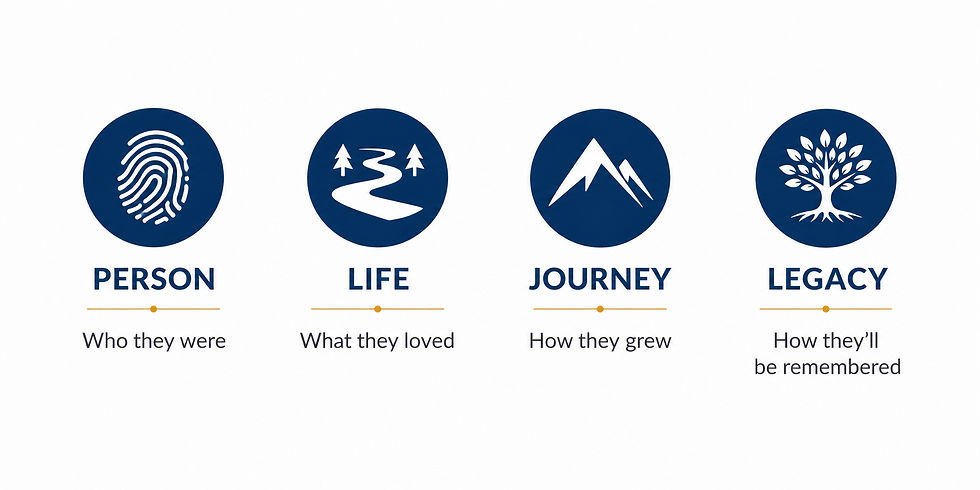
At Lastly®, we use the LifeStory® Framework to help families move beyond names, dates, and accomplishments to discover the stories that truly defined a person’s life.
Instead of asking, “What should I write?”
We encourage families to begin by asking four simple questions:
Who were they?
How did they live?
What journey shaped them?
What legacy did they leave behind?
Those four conversations often uncover the memories, relationships, life lessons, and defining moments that become the heart of a meaningful obituary.
Whether you’re writing a traditional obituary, a warm personal tribute, or a storytelling obituary, the goal remains the same:
Honor the whole life—not just the final chapter.
Guided Memory Workbook™
If you’re not sure where to begin, you’re not alone.
Many families know exactly how someone made them feel, but struggle to organize a lifetime of memories into a single obituary.
The Guided Memory Workbook™ was created to help with that process.
Through thoughtful conversation starters and guided reflection, it helps families uncover the stories, traditions, relationships, and life lessons that often become the most meaningful parts of an obituary.
Because before you write the words…
You first need to remember the stories.

Related Resources
If you’re preparing to write an obituary, these additional resources can help you gather stories, organize your thoughts, and create a meaningful tribute.
How to Write an Obituary: Templates, Examples & Step-by-Step Guide — A complete guide that walks you through every step of writing a thoughtful obituary, from gathering information to writing the final draft.
Free Obituary Templates & Printable Examples for Families — Choose from a variety of obituary templates and examples to help you get started with confidence.
How to List Family in an Obituary — Learn traditional and modern ways to acknowledge spouses, children, grandchildren, siblings, and extended family with clarity and care.
Frequently Asked Questions
Is one person responsible for writing an obituary?
Not usually.
While one family member often organizes the obituary, it’s common for several relatives and close friends to contribute stories, memories, and important details. Working together often results in a more complete and meaningful tribute.
Can multiple people write an obituary together?
Absolutely.
Many of the most meaningful obituaries are collaborative efforts. One person may write the first draft while others contribute memories, photographs, family information, or edits before it is published.
Does the funeral home write the obituary?
Most funeral homes provide guidance, templates, or editing assistance, but they typically rely on the family to provide the personal stories, biographical information, and funeral details.
What if no one in the family feels comfortable writing?
That’s more common than you might think.
Start by gathering memories rather than trying to write complete sentences. Ask family members and friends to share stories, favorite memories, and the qualities they’ll remember most. Once those memories are collected, writing the obituary becomes much easier.
Can a close friend write an obituary?
Yes.
If a close friend knew the person well and can faithfully tell their story, they may be the right person to write the obituary. Friends often remember parts of a person’s life that even family members may not have experienced.
Final Thoughts
Families often begin this process asking,
“Who should write the obituary?”
By the time the obituary is finished, many discover they were asking the wrong question.
The better question is:
“How can we tell their story well?”
The answer is rarely found in finding the perfect writer.
It’s found in gathering the people who loved them.
Sharing stories.
Remembering moments.
Laughing through tears.
Helping one another recall the qualities that made someone unforgettable.
When those memories come together, the obituary becomes more than an announcement of a death.
It becomes a celebration of a life.
People won’t remember who wrote the obituary. They’ll remember the person whose story it told.
At Lastly.com, Last Words Matter™
The responsibility of writing an obituary can feel overwhelming.
But you don’t have to write it alone.
Lastly® helps families discover and tell the story of a life well lived through thoughtful
conversations that uncover the memories, relationships, and defining moments that
deserve to be remembered.
Because every meaningful obituary begins the same way…
Not with a blank page.
But with a conversation about someone you love.


Comments